How to Keep Your Property Safe and Clear During a Major Renovation
The majority of the damage that occurs during renovations doesn’t happen in the construction process. It happens around the edges – debris left on stairs overnight, dust allowed to migrate to untouched areas, bulky furniture left in an unprotected workspace. Wasting, and spacing; if you don’t manage both from day one, they’ll manage your schedule, your safety, and your budget for the rest of the job.
Start with a blank canvas before tradespeople arrive
The primary task is to get rid of what’s already redundant. Old lounges, wardrobes, beds, and freestanding shelving units are not just taking up space. They’re gathering dust, pinching inches, and won’t survive the demo if you wait until later to nudge them out. The sooner they’re gone, the better – and that goes for the entire room.
Besides overall convenience, there is a more practical reason to remove and dispose of old furniture first: the faster your trades can work. An empty room is a quicker measure, less walled-off, and more manageable zone in which to saw and sand, nail and knock. You can arrange Furniture Removal Sydney right after your skip bin provider and give the trades the best room to start your improvements.
Zone the site before the dust starts moving
After clearing the space, the following step would be to establish a solid barrier between the construction area and the rest of your house. Heavy-duty plastic sheeting and zip-door systems are the correct tools for this task. Thin drop cloths won’t suffice, as ultra-fine silica dust gets airborne, travels through the air, and settles on objects up to 10 metres away with every footstep, creating a dangerous health hazard that should be contained. It also requires hours of cleaning to recover the room and the rest of the residence.
Seal every doorway and vent opening at the perimeters of the work zone. This barrier needs to be treated as the most solid wall in existence for the period of the renovation. Any tears in the sheeting should be patched over with tape, not merely covered with a rag and an elbow. Site-hoarding and dust screens add a finished look to a renovation, but they are largely about function. They keep the host environment safe and clean while ensuring that the rest of the house isn’t compromised by the work being done on it.
Protect the surfaces that aren’t being replaced
During most renovations, floors, architraves, and fixtures that are staying put still get damaged. Not because anyone is being reckless, but because you don’t get around to laying down that corrugated plastic sheet or that residue-free protection tape until after something is scratched. It’s human nature.
There’s a reason heavy-duty floor protection products like ram board exist. They’re designed for construction foot traffic. Standard builder’s paper will tear after a few passes. But the harder or more expensive the thing is that you’re trying to protect, the more sense it makes to invest in protecting it. If you’re keeping the floors, and they’re hardwood or tiled, the cost of floor protection is a miniscule fraction of what even a single tiny repair or patch job on them will cost.
It’s the same deal with door jambs, vanities, and anything that’s in close proximity to a high-traffic corridor. Tape those edges before the first tradesperson walks through the door.
Ensuring everyone from the trades to the project manager knows their role in managing debris may seem like a fine level of detail too far, but a bit of planning will keep the job moving efficiently.
Run a clean-as-you-go policy every day
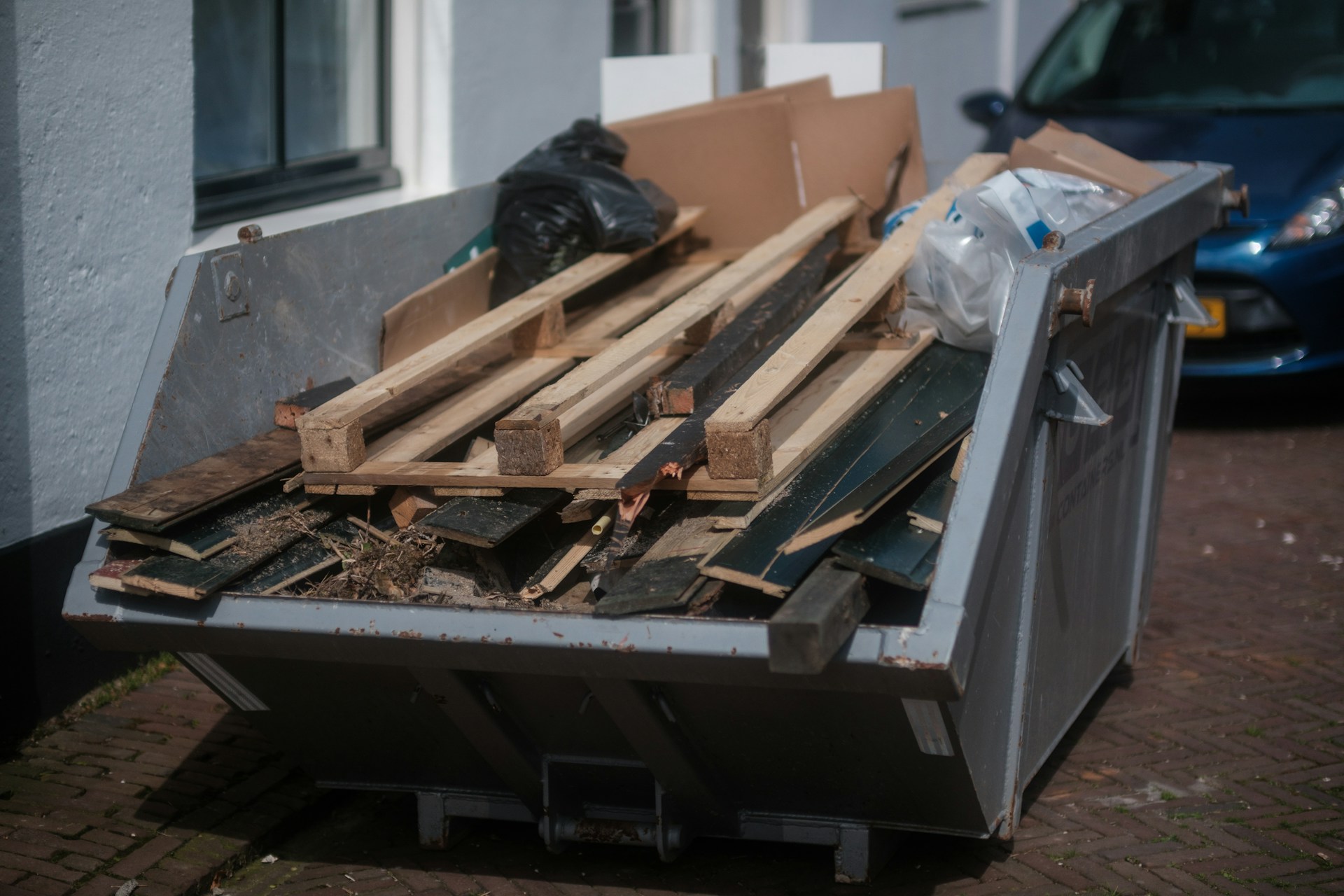
Performing end-of-shift cleanup every day is very important. Debris build-up can lead to fires, accidents (slips, trips, and falls), and compromise the building’s structure if it’s simply too heavy and being put in places that weren’t designed to support it.
The clean-as-you-go philosophy demands that all trades remove their own rubbish before they leave the worksite. Concrete off-cuts, timber off-cuts, packaging, plasterboard scrap – it all goes out at the end of the day it’s created. This makes the site safer for everyone returning the next day and ensures that the site compound isn’t a disaster zone by week two.
Dangerous materials, especially asbestos and lead-based paint that can be found in any house built before the 1990s, should be identified and removed by trained and certified specialists before general rubbish removal begins. This is a step that you can’t rush or skip.
Keep the project from consuming your property
The work is not very difficult in itself. What makes it seem like things are going off the rails are all the problems that slowly accumulate around the work – damaged surfaces, dust in every corner, contractors working around junk that should have been taken away weeks ago. If you treat home remodel waste removal as a logistics problem, not a cleanup problem, from the beginning, things go better.
Leave a Reply