
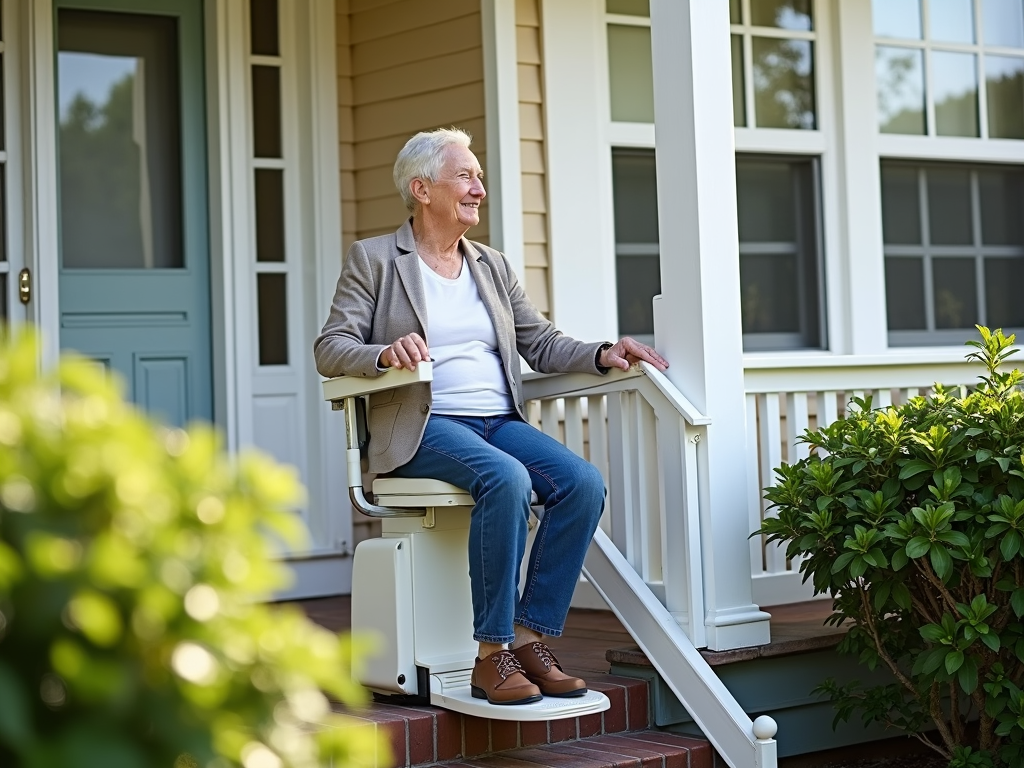
Imagine struggling to reach your own garden, front porch, or garage just because of a flight of stairs. That’s the reality for many people living with reduced mobility. And while indoor stair lifts are relatively common, outdoor ones can be a game-changer too.
Let’s get real for a moment. Losing the ability to move freely outside your home doesn’t just make things inconvenient. It chips away at your independence. That’s where outdoor stair lifts come in.
So, what are they exactly?
What is an Outdoor Stair Lift?
An outdoor use stair lift is a motorised chair that travels along a rail fitted to an outdoor staircase. It allows someone to sit down at the bottom or top of the stairs, press a button, and be carried up or down safely.
Just like indoor stair lifts, they’re designed to support people who find stairs physically difficult or unsafe. The main difference? These ones are made for the outdoors. They’re built to handle the elements — rain, wind, sun and even snow — without compromising safety or performance.
The chair, rail, motor, and controls are all weather-resistant. Some come with covers to protect the seat and components when not in use, and materials are chosen specifically to resist rust and damage from UV exposure.
Who Actually Needs One?
Not every household needs an outdoor stair lift, but there are plenty of situations where it makes a real difference.
Ageing in place
If someone wants to stay in their home as they age, but they have steps at the front, back or side of the house, a stair lift can be a smart solution. It makes the property more accessible without expensive renovations.
Mobility issues
Whether from a temporary injury, a long-term condition like arthritis, or a disability, outdoor stairs can become risky. A stair lift takes that risk out of the equation.
Carers or family support
For people looking after someone with reduced mobility, an outdoor stair lift can ease both physical strain and emotional stress. It means fewer worries about falls and fewer struggles with lifting or guiding someone up or down the stairs.
Multi-level gardens or sloped homes
Not every outdoor space is flat. If your property has a split-level garden, a steep path or stairs leading to key outdoor areas like a clothesline, garage or shed, a lift can make the entire property usable again.
Post-surgery recovery
Even if it’s just for a few months, surgery recovery often limits mobility. A temporary or permanent outdoor stair lift can help someone keep their independence during that period.
Not Just for the Elderly
There’s a common misconception that stair lifts are only for older adults. That’s simply not true. Anyone with a physical challenge that makes stairs difficult can benefit, regardless of age. Conditions like multiple sclerosis, recovery from a broken leg, or long COVID symptoms can all be factors.
What to Consider Before Buying
It’s not quite as simple as picking one and getting it installed. There are a few important things to think about before going ahead.
Stair type
Is your staircase straight or curved? Outdoor stair lifts can work for both, but the cost and installation process will vary. Straight stairs are generally cheaper and quicker to set up. Curved ones usually require custom-built tracks.
Power source
Most stair lifts run on batteries that charge from a mains connection. That way, they’ll still work during a power outage. Make sure the outdoor model you choose is compatible with your home’s setup and has easy access to power.
Weight capacity
Don’t assume all stair lifts are the same. Double-check the maximum weight limit to make sure it fits the needs of the person using it.
Weatherproofing
Sounds obvious, but it’s crucial. Some cheaper models might claim to be outdoor-friendly but aren’t truly made to last in harsh weather. Look for sealed controls, rust-resistant frames, and waterproof covers.
Storage
Is the chair foldable? Can it be covered or parked in a protected area when not in use? You’ll want something that doesn’t clutter the pathway or get damaged by being constantly exposed.
Installation access
Not all homes have the same space or access. A qualified installer should visit the site beforehand to make sure everything will fit properly and run safely. Don’t skip this step.
Maintenance needs
Like anything mechanical, outdoor stair lifts need regular checks. Ask what kind of servicing is required and how often, and make sure there’s local support available when you need it.
Things You Might Not Have Thought About
There are a few smaller details that can make a big difference in day-to-day use.
- Remote controls – Some outdoor lifts come with remote sends, so someone at the top or bottom can call the chair up or down as needed.
- Seatbelts and armrests – These add safety, especially if the user has balance issues.
- Lockable functions – Handy if you want to restrict use (for instance, if there are kids around).
- Footrest sensors – These can detect obstructions and stop the chair if something’s in the way.
They’re not always standard, so it’s worth asking what features are available and which ones come at an extra cost.
What It All Comes Down To
Mobility isn’t just about walking. It’s about access. If someone can’t leave their house safely or comfortably, even short distances become isolating. Outdoor stair lifts might not be glamorous or exciting, but they can change someone’s quality of life in a very real way.
For families supporting someone with limited mobility, or for people looking to stay independent as long as possible, this simple device can make all the difference.
And that’s really the point. It’s not just about getting up the stairs. It’s about getting on with life.