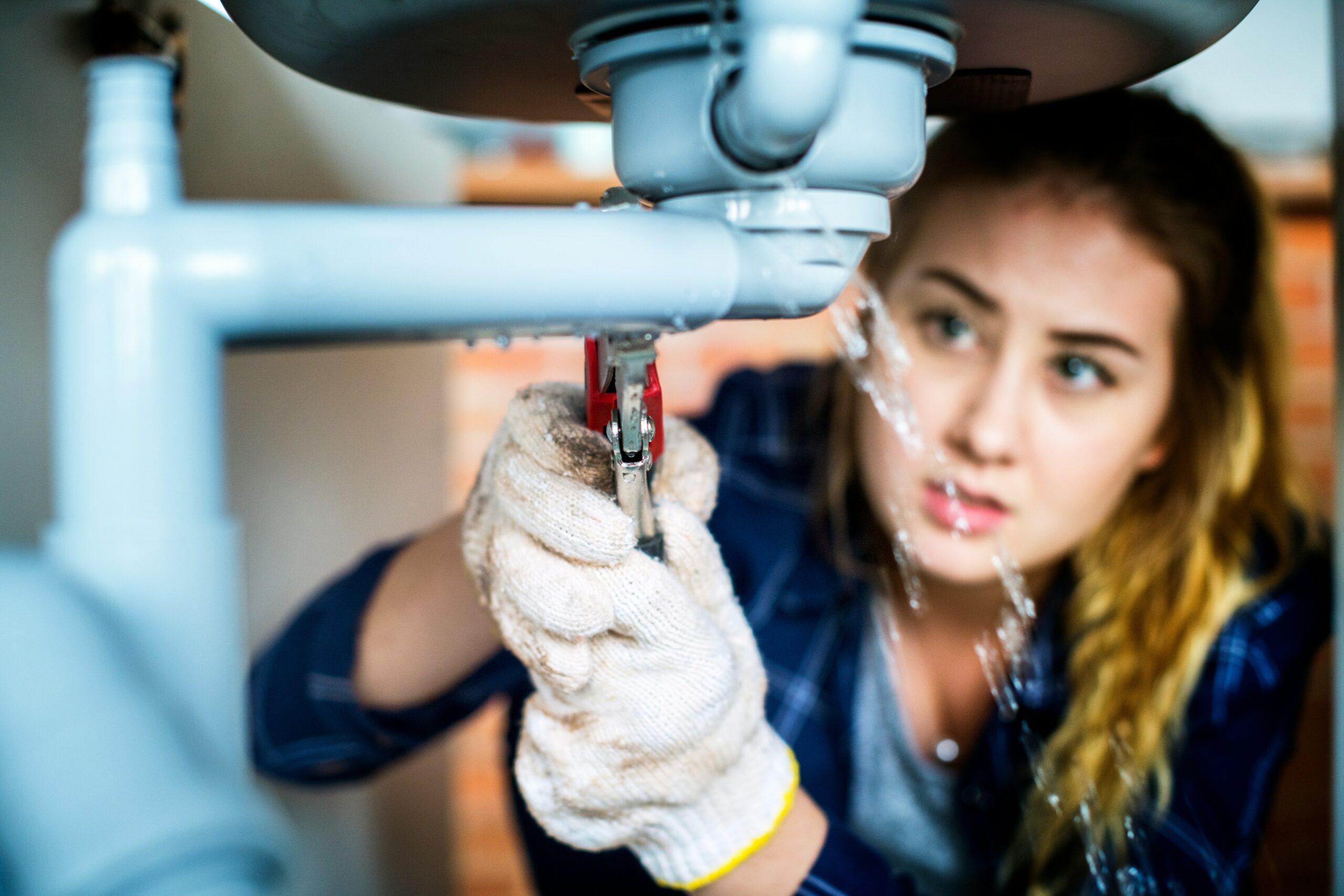
The Complete Guide to Finding and Fixing Hidden Household Water Leaks
A full manual to locate and repair unknown home water seepage
Almost all pipeline seepages will not loudly announce their presence with a puddle. More often, they’ll reveal themselves as a marginally higher water statement, a musty scent you cannot determine, or a warm area on the tile floor. By that point, you’ll probably have had water leaking for up to a few weeks if not months.
The following manual guides you through a diagnostic sequence that most plumbers will use: first, attempt what is free, then what is not expensive, and you can only bring in more pricey tools once you have a seepage and the common causes are not the issue.
Start with the water meter, not a wrench
Before you make a run to the store or grab a sledgehammer, it is worth using the free diagnostic tool you already have. Every home is equipped with a water meter, and most have a little triangular or star-shaped low-flow indicator. This spins to indicate movement even when only tiny amounts of water are trickling into the system.
Here’s the test: make sure that every fixture and appliance in the house is turned off. No washing machine filling, ice maker cycling, or toilets refilling. Read the meter and note where the low-flow indicator sits. Then wait 30 minutes and read it again. If that little pointer has moved at all, water is moving through your system when it shouldn’t be, and nothing in your home should be using it. That’s a leak, end of story, even if you can’t see or hear the evidence of it.
This test costs nothing and takes about half an hour. It’s also the only way to know for sure whether you have a real problem, or just an old house that likes to talk back to you.
The toilet is almost always the first suspect
If the water meter test verifies a leak, check the toilets before doing anything else. A worn flapper, the rubber seal at the bottom of the tank, is far and away the number one culprit of hidden water loss in a home. When it fails to seat properly, water leaks from the tank into the bowl virtually non-stop, often without making enough noise for anyone to easily hear, and it can waste thousands of gallons before anyone is the wiser.
Testing for this is easy. Drop a dye tablet or some food coloring into the tank and then wait ten minutes without flushing. If you see color in the bowl, the flapper is your problem. It’s generally a $10 part and fifteen minutes with a wrench, not a plumbing call.
Test every toilet in the house this way, not just the one you’ve targeted as the culprit. Flappers degrade so gradually that an old toilet in a three-bathroom home may have two leaking flappers with no one the wiser.
Check your water pressure while you’re at it
You can easily attach a pressure gauge to an outdoor hose bib. The pressure for residential systems should be between 40 and 80 psi. If your pressure reading is higher than that, a failing or incorrectly adjusted pressure regulator is forcing every joint, valve, and appliance supply line in your house to do more work than it should.
This is important because high pressure generally won’t blow something wide open. It will, however, force every drop of water in your system to try and find a way out of your pipes, which leads to constant small seepage at fittings and connections. This looks like nothing until it has been dripping into a wall cavity for several months. A pressure gauge is a $15 item that will tell you something about your plumbing a visual inspection never will.
Reading the signs of a slab leak
Pipe leaks under a slab foundation are known as slab leaks. Slab leaks occur when the water or drain lines that run below a concrete foundation develop a hole. They are often difficult to detect and can go unnoticed for a long time. Common signs of a slab leak include warm water bubbling up from the floor, unexplained cracks in your flooring, or an unexplained increase in your water bill.
Unfortunately, these symptoms will not be fixed by a DIY repair. You cannot turn off a slab leak using a household valve, and you should not dig through your concrete foundation on a hunch. Detecting a slab leak typically requires either using a tracer gas or acoustic detection equipment. And, if you are off by even an inch in your guess of where the leak is occurring, you could end up tearing up a lot of flooring for nothing.
Pinhole leaks and what your water chemistry is doing to your pipes
It’s rare for copper pipe to fail catastrophically. Instead, it develops pinhole leaks – small corrosion holes that seep water rather than spray. And the cause is often chemical rather than structural. Water with a pH of less than 7.0, or water with a high chlorine content, leaches from the copper over years. The pipe looks healthy from the outside until it’s not.
Usually, there’s a stain before there’s a drip. Soft drywall, a brown ring on the ceiling, or a patch of wall that seems slightly moist to the touch can appear several weeks before a pinhole has opened up enough to produce a steady stream of water. Mold and mildew are often the first red flag that a homeowner sniffs, coming long before any evident structural damage. If you smell mustiness in one room and can’t track down the source, it’s time to call a plumber, not a maid.
Where DIY ends and professional detection starts
You know a leak is there but you can’t see it and you can’t reach it – so what do you do? If you’re like most people, you get out the Sawzall. But before you start attacking your walls, flooring, or concrete structures, you should probably know that leak location companies now have access to very high-tech tools that can find even the smallest amount of water loss absolutely anywhere. These tools can spell the difference between a $300 repair and a $3,000 renovation.
The tiniest water line leak can be detected through electronic amplification equipment using ground microphones and listening sticks. Acoustic leak detection equipment employs sensitive ground microphones and sensors that can readily detect the signature hissing or whooshing sounds of water under pressure as it escapes from a tiny crack, loose-fitting, or poorly sealed joint. These sounds might not carry to the surface or through a concrete slab or even be audible in a wall cavity or ceiling. The acoustic equipment magnifies the sounds that are naturally present at the leak site, including those that are sometimes inaudible to the human ear, making it easy to pinpoint the location of the break.
Thermal imaging cameras sense temperature differences on surfaces and show exactly where a pipe runs under a concrete floor or a sink cabinet. It also can show the easiest path for water escaping from a broken pipe, and even small amounts of water will show up clearly. If used early, a thermal imaging camera will often register a wet path from the source all the way to the present location. Removing the wet drywall, wood, or another material will prevent mold growth and water damage in the future. This is very important as a small leak could go undetected for long periods behind a bathroom cabinet, kitchen sink, or wall.
A service like Simply Leak Detection uses exactly this kind of equipment to pinpoint the exact break before any demolition happens, which means the repair crew that comes in after knows precisely where to cut instead of opening up an entire wall on a hunch.
Why "just a small leak" costs more than it looks like
It may be tempting to ignore a leak that is not causing an immediate flood. However, even just one drip per second can waste about 3,000 gallons of water in a year. This is roughly equivalent to the amount of water used in 180 showers. And that’s from a leak that you probably consider to be "barely noticeable."
The bigger picture suggests that this is not an isolated issue either. In fact, the EPA estimates that leaks in U.S. homes waste 1 trillion gallons of water every year nationwide. This translates to about 10,000 gallons of water wasted per household annually. It is estimated that 10% of U.S. homes lose 90 gallons or more per day to leaks that go undetected. This is not a case of one bad pipe in a few unfortunate homes. This is a regular, widespread issue that many homeowners are paying for without realizing it.
Smart monitors tell you something’s wrong. They don’t tell you where.
Devices such as Flume, Moen Flo, and Phyn have gained popularity. They’re great at one thing in particular: notifying you that there’s a leak somewhere in your system by detecting abnormal water flow rates. That’s valuable, and we’d recommend one to any homeowner looking to gain better visibility into their water usage.
But they have a limitation that doesn’t get talked about enough. Smart monitors can only tell you that water is moving when it shouldn’t be. They can’t tell you where that water is coming from. You still have to find the leak yourself, and by the time the app sends the alert, the seepage has often already been running long enough to soak insulation or start warping subfloor.
Treat smart monitors as an early warning system, not a solution. They shorten the time between "leak starts" and "leak discovered." They don’t shorten the time between "leak discovered" and "leak located and fixed."
The insurance problem nobody mentions until it’s too late
Here’s a detail that surprises many homeowners. Most standard policies draw a distinction between sudden, accidental damage, and gradual seepage. A burst pipe that floods your kitchen overnight is normally covered. A slow pinhole leak that’s been dripping behind a wall for four months, causing rot and mold, is often considered to be gradual damage and is entirely excluded.
This turns "I’ll get to it eventually" into a potentially very expensive gamble. A leak you notice and get fixed early is a minor repair bill. The exact same leak, left to run until it causes visible structural damage, can become a "not covered" claim, leaving the entire cost in your lap.
Prevention that actually moves the needle
There are a few cheap habits that will prevent most of the common hidden leak scenarios before they happen.
For example: swap out rubber washing machine supply hoses for braided stainless steel ones. Rubber washing machine hoses are a known failure point and a leading cause of sudden, high-volume flooding. The upgrade costs less than $30.
Check your water pressure once a year with that same $15 gauge. Swap toilet flappers every couple of years as routine maintenance rather than waiting for them to fail. Knowing where your main shut-off valve is, and making sure everyone else in the house does too, is a good general practice – in a real pipe burst, the time it takes you to find that valve is often the difference between a $200 repair and a $5,000 claim.
None of this requires special skill. It requires doing it before you need to, not after.
The bottom line
A hidden pipe leak rarely stays hidden forever, but by the time it reveals itself through stained ceilings or warped floors, you’re looking at a repair bill several times larger than if you’d caught it early. The meter test, the dye tablet, and the pressure gauge cost virtually nothing and take less than an hour to apply together. Run them first, trust what they tell you, and bring in equipment built for finding what you can’t see once you’ve confirmed there’s something to find.
Leave a Reply