
The Secret to Making Your Master Bedroom Feel Like a Five-Star Suite
Walk into a well-designed hotel suite and something shifts immediately. The air feels calmer. Your shoulders drop. You want to sit down. That response isn’t accidental – it’s engineered through a specific set of sensory decisions that most people never consciously notice, which is exactly why they’re so effective.
Start with the bed, not the walls
Many times, when we read about interior design tips, the first things that are addressed are paint colors or furniture arrangements. However, these tips are often forgotten, ignored, or misunderstood. Let’s save that for later. The bed is the central piece of a bedroom, is the piece de resistance of any bedroom and the single greatest opportunity to set the tone for everything that follows.
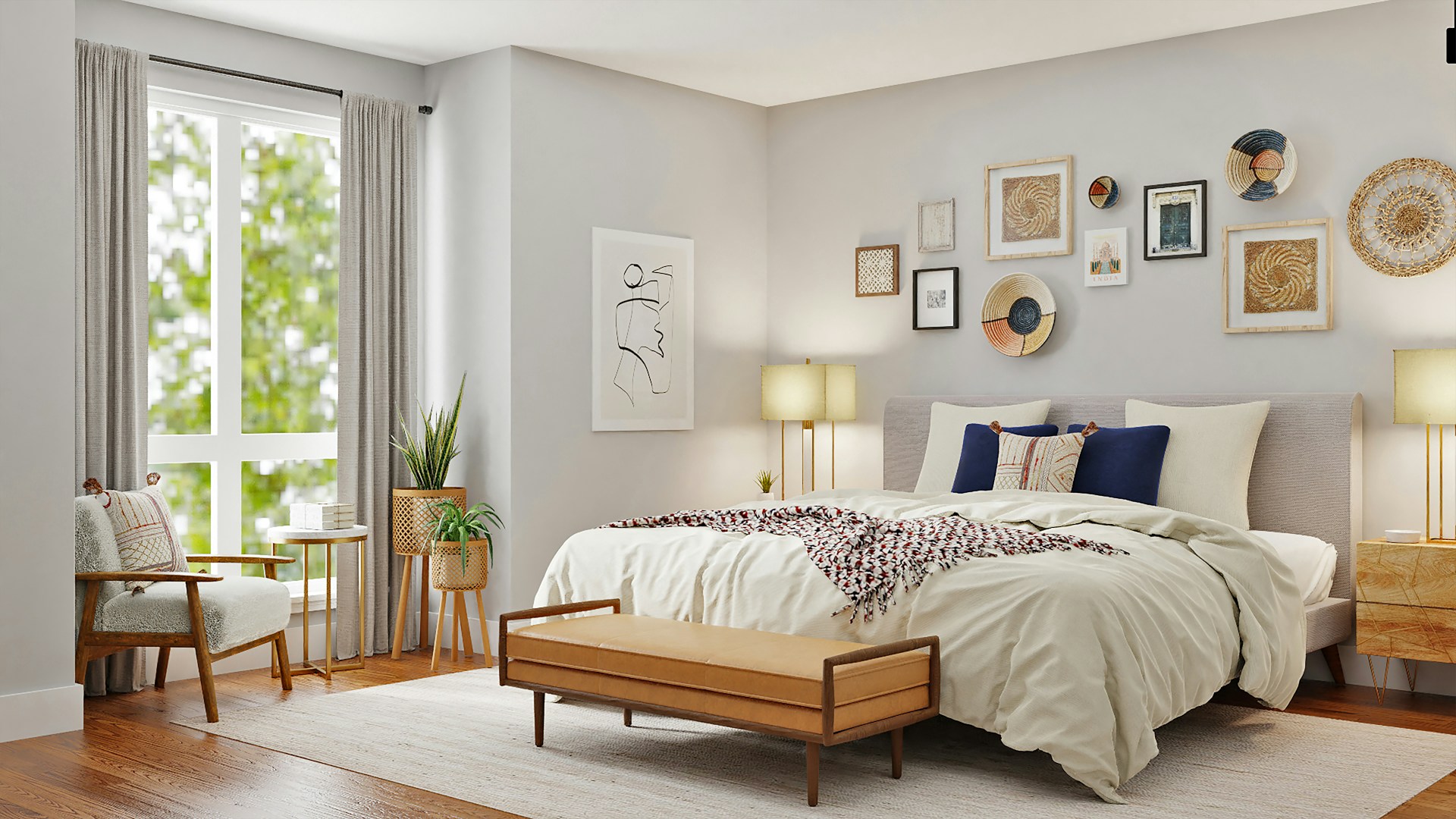
One of the hallmark techniques of a luxury hotel is something called a ‘bed-scape’. You aren’t just throwing things on the bed, you are intentionally layering things on top of the bed to the point it looks built – a bed throw here, this little cushion there. It’s that effortless-but-not-effortless look. The ingredients are a fitted sheet (go 400+ thread count cotton. You’ll appreciate the difference when your skin touches it), flat sheet, light blanket, generously sized drapey duvet, a combo of your sleeping pillows and then two or three decorative pillows in coordinating fabric. Voilá, bed-scape!
Control light like a professional
Managing natural light is a small aspect of a bedroom that makes it photogenic and actually functional for sleeping. Roller blinds are not what you will find in upscale hotels. Generally, they will use a combination of blinds or shades – a sheer layer for allowing light during the day and heavier processing for blocking all light when sleeping.
For a lot of projects that you do yourself, the window covering is only seen as a last step. But really, investing in luxury window coverings is the difference between a well-decorated room and a professionally designed room – a look that is properly scaled and sits flush to the ceiling, and extends far past the window on both sides, to make the window look architectural and not added on.
The flaps or lighting bleed at the side of the shade is a sign you have cheap coverings – you certainly won’t find it in a luxury high-end room. Total darkness has a measurable effect on sleep quality, and that attention to detail is what sets a great bedroom apart.
Build a color story, not a color scheme
The difference between a beautifully restful bedroom and one that just looks well-designed has a lot to do with the density of the colors used. A good rule of thumb is that you’ll rarely find strong primary colors in a five-star vacation hotel bedroom. Instead of pure colors, they opt for colors that have white, black, or gray mixed into them. So, for example, you get a warm greige, and no beige at all, a slate blue in place of cobalt, a washed sage green rather than green.
If you think about what colors promote sleep and relaxation, those are the colors for you. White, gray, black, and these drained-of-life hues also happen to be what shows up in research as optimal for aiding relaxation and sleep. Your brain is inactive, but you’re not dull. The pigment in bedroom design should not get your neurons firing like it’s New Year’s Eve. A bedroom isn’t a space for fireworks.
Proportion and the negative space problem
Many bedrooms look cluttered, though they’ve been recently cleaned. The problem? Furniture that’s fine in another setting – the nightstand you brought from your former apartment; the dresser you can fit both a changed relationship and a changed lifestyle into a corner already – often tends to be unfit for the room.
Small pieces often do more than grand gestures. Moving and experimenting with the furniture you do have will soon make it apparent what will fit, what won’t, and what was unnecessary in the first place.
Don’t do anything, just give the thing in your room some competition before adding to the pile.
The sanctuary corner
A bedroom designed only for you to sleep will never feel like a proper suite. A good hotel room will have at least one seat – not an office chair, but a nicely designed piece you wouldn’t mind having in your living room. That seat exists to invite you to read a book or contemplate the view when your day is winding down. Most good rooms also have a place that isn’t the bed but is meant for napping, sleeping, or curling up to watch TV. Those two functions require at least two blocks of space, each with its own source of light, natural or artificial.