
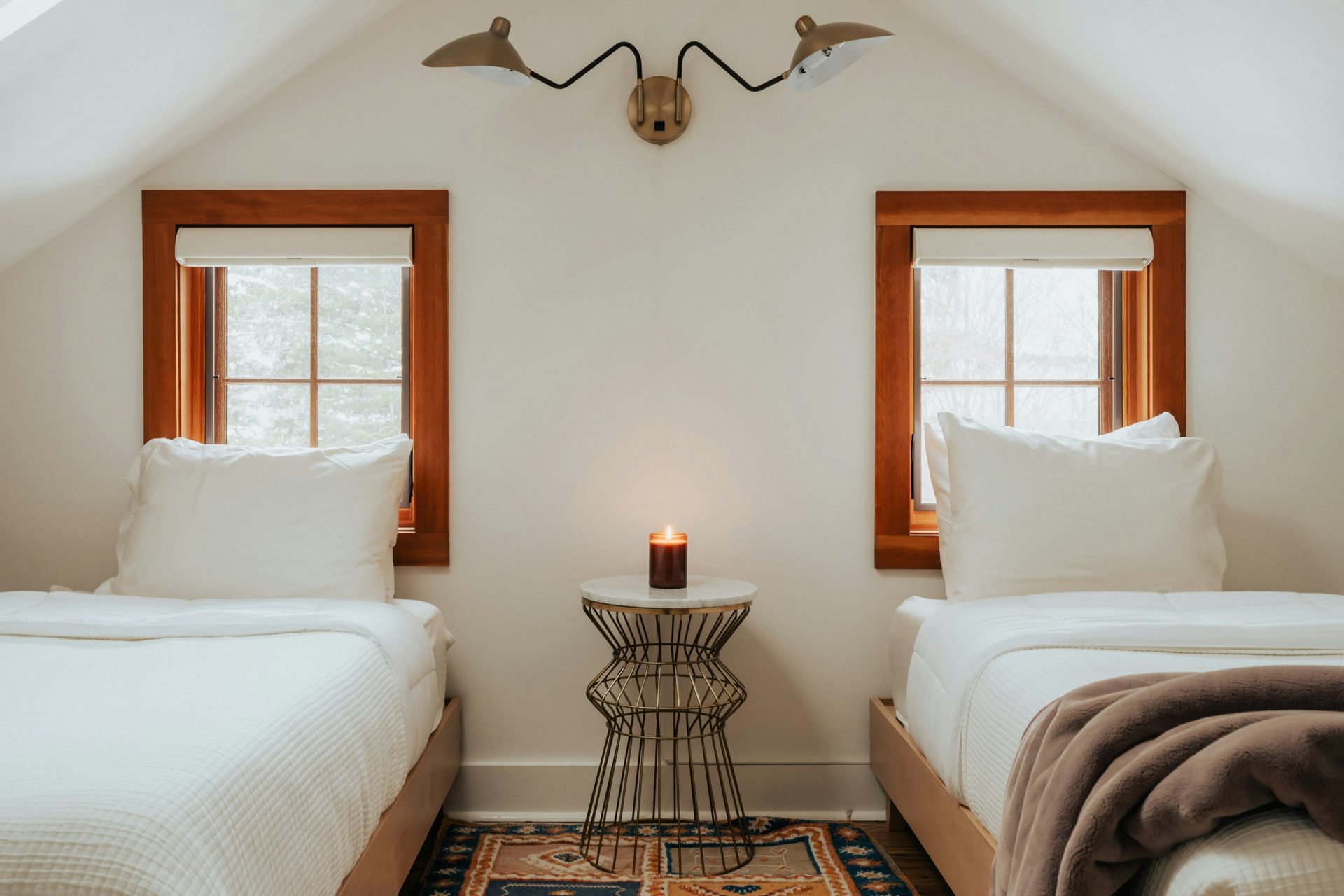
Ever thought your bed might be too big? It’s not something most people question. Bigger often feels like better: more space to spread out, roll around, and avoid being elbowed in the ribs. But here’s the thing: a larger bed doesn’t automatically mean better sleep. In fact, going smaller might be exactly what your sleep needs.
More Room Isn’t Always Better
There’s this common belief that if you want more comfort, just go for the biggest bed you can fit. But here’s what that can lead to:
- Extra movement – With more space to toss and turn, you might actually end up moving more, not less.
- Less connection – If you share a bed, you could find yourselves on opposite ends, reducing the natural sleep cues and closeness that help regulate sleep cycles.
- Overwhelmed space – A huge bed can dominate a bedroom, making the whole space feel cramped or cluttered, which doesn’t exactly scream “relaxing sleep zone.”
A smaller bed can help create a more intentional sleep environment — one that’s about rest, not just space.
Better Sleep Starts with Better Boundaries
It might sound odd, but having a more compact sleep space can make your brain feel more secure. You’re physically more contained, which can cue your body into a restful state. There’s less need to orient yourself or adjust your position constantly because your environment is simplified.
With a single mattress size, you’re more likely to stay still, feel gently “held” by the space, and get fewer sensory inputs — all of which can help your brain settle. This can be especially helpful for light sleepers or anyone easily disturbed during the night.
Sharing a Bed? Smaller Might Actually Be Closer
For couples, this can feel counterintuitive. But downsizing doesn’t have to mean sacrificing comfort, it can actually encourage better sleep habits together.
Here’s how:
- More consistent sleep cues – When you’re closer together, your sleep rhythms are more likely to sync up.
- Stronger sleep association – Being close can signal your brain that it’s time to rest, especially if physical touch like hand-holding or light contact is part of your routine.
- Less sprawling – With limited space, there’s less temptation to scroll, spread out work, or snack in bed. It becomes a dedicated sleep space again.
This doesn’t mean squeezing into something uncomfortably small, but it does mean rethinking what size actually suits your shared routine.
Small Beds, Big Benefits for Your Bedroom
Your bedroom isn’t just where you sleep; it’s your personal space to reset. When your bed takes up too much of that space, everything else can feel squeezed out. Downsizing gives your room some breathing room. Suddenly, you can move more freely, maybe even fit in a chair, a little shelf, or just enjoy the extra open floor.
Visually, a smaller bed can help the room feel calmer and more balanced. It doesn’t overwhelm the space, and that balance creates a more restful atmosphere. It also helps with airflow. Without bulky furniture crowding every corner, the room feels fresher, and better air circulation at night can make a real difference to how deeply you sleep.
In short, when your bed fits the room properly, the whole space works better. And that can shift the way you sleep.
Relearning How to Sleep Well
Sometimes, better sleep is about stripping things back. A smaller bed encourages exactly that: fewer distractions, less clutter, and more focus on rest.
When there’s no extra room to spread out your devices, work stuff, or piles of clothes, your brain gets a clearer signal: this space is for sleeping. You start paying more attention to what actually supports your sleep — things like the right pillow, a mattress that suits your body, or simple habits that help you wind down.
It also creates a chance to reset your routine. With a streamlined sleep setup, you’re more likely to build better habits around bedtime, like switching off earlier, keeping things tidy, or using your bed only for rest, not for work or endless scrolling.
When Downsizing Makes Sense
This approach isn’t for everyone. If you’re really tall, have specific needs, or share your bed with kids or pets, a bigger size might still be best. But for many people, large beds are simply the default, chosen out of habit or just because the room allowed it.
So, how do you know if a smaller bed could work for you? If your current setup leaves your bedroom feeling cramped, if you rarely use the full width of your bed, or if you still wake up tired despite all that space, it might be worth a rethink. Sometimes, less really is more when it comes to restful sleep.
Sleep Smarter, Not Bigger
A smaller bed isn’t a downgrade; it’s a chance to be more intentional with your space and your sleep. When the size of your bed fits your needs instead of just your floorplan, it can transform how you feel at night.