Why Easy-to-Clean Materials are the Secret to a Low-Maintenance Kitchen
Grease spills, sauce splatters, or an errant pot of soup are inevitable on any work surface. Whether cleaning up takes five seconds or ten minutes often depends on one factor: Is the surface nonporous or porous? Get that part right, and everything else is easy.
Why porous surfaces make more work for you
Natural wood, unglazed stone, and flat paint all have one problem in common. They contain minuscule gaps and exposed pores where fluid, oil, and grease can enter and not remain on the surface. Once this occurs, simply wiping these surfaces will spread the mess around. Coated walls behind the stove can be cited as a classic instance, they may appear fine for some time, but they will begin to display dull spots and stains that refuse to come off despite your best efforts with the cleaning spray.
However, glazed ceramic tiles function differently. The glaze is a glassy coating baked onto the top, acting as a seal that prevents anything from penetrating the clay beneath. As a result, grease, tomato sauce, or steam will just stay on top, waiting for you to clean it off. Nothing seeps in, nothing remains attached to the material, and nothing remains for bacteria to proliferate on, because they are unable to feed on it. Most people underestimate how important this latter detail is – studies by microbiologist Charles Gerba at the University of Arizona have shown that the average kitchen can have up to 200 times the number of bacteria found in a bathroom. This makes non-porous surfaces in food preparation areas a real health concern rather than a nice-to-have.
Comparing finishes: gloss, matte, and everything between
The finish is as important as the tile material. The glossier the glaze, the smoother the tile. That means there are fewer nooks and crannies on the tile for dirt and grease to cling to, so it doesn’t just clean more easily when you come to it, but ages better in between washes. Matte and textured finishes look more interesting but carry a hidden cost in time and elbow grease over the years. However, gloss does make water spots and fingerprints stand out more, so if multiple people are cooking and the wall’s likely to get brushed against a lot, you might decide that a matte finish is more practical after all. It’s worth weighing that up against the extra scrubbing gloss saves you elsewhere.
If you’re pragmatic about it, glazed ceramic wall tiles have a lot going for it. They need the least cleaning, stay stain-free and low-bacteria for longer, and the grouting is a minor weak point in an otherwise waterproof surface. Paint stains and needs redecorating. Wallpaper can’t handle steam or grease at all. Natural stone looks premium but is porous and needs regular sealing. Glass splashbacks wipe clean easily but show every smear and fingerprint, and they cost more to install and replace if cracked. For most kitchens, glazed ceramic hits the best balance of low upkeep, durability, and price.
The splashback is where it counts most
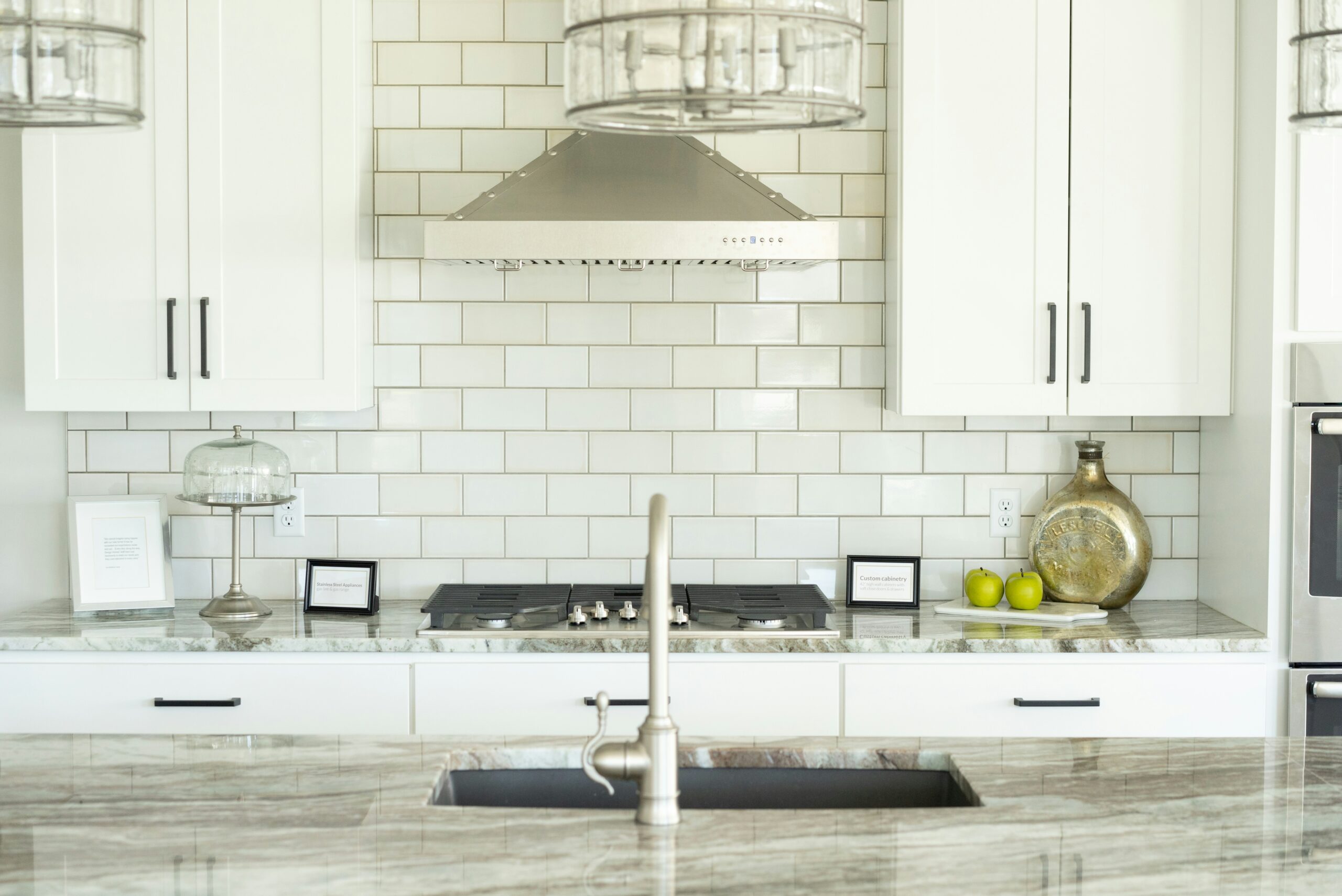
If you had to choose just one wall to invest in when renovating your kitchen, make it the one behind the hob. This is the area that’s hit with oil spatter, steam, and the odd overflowing pan, day in, day out. Unfortunately, paint and wallpaper don’t cope well with that level of wear and tear. Eventually, paint will lose its freshness and need repainting while wallpaper will start to peel, bubble, or stain irreparably. A tiled splashback simply needs a quick wipe after cooking and it’ll look as good as new in five years. It’s your best bet for the biggest, easiest-to-maintain impact.
Don’t let grout undo the good work
What many homeowners don’t realize is that no matter how stain-resistant the tile you choose, the wall will look dirty if the grout lines get stained. Cement grout is porous, and it absorbs grease, making it easy to discolour it over time, especially on walls in the splash zone. The way to avoid this is to do one of two things. First, select larger format tiles with fewer grout lines to deal with in the first place. The second is to use epoxy grout, which is non-porous and virtually maintenance-free once it’s installed. This keeps the walls looking clean over the long term, and not just the first year or so.
The same logic applies to bathroom wall tiles
It may seem like splashbacks and bathroom walls have nothing in common, but they are essentially the same problem, just that one is for oil and food splatter while the other is for humidity, condensation, and soap scum. The underlying problem is the porosity of the surface. Porous surfaces such as paint, wallpaper, or unglazed tiles will trap moisture and residues like a sponge, while glazed ceramic acts as a non-porous barrier that resists such infiltration. Glazed ceramic handles bathroom dampness just as well as it handles a kitchen splashback, which is why it’s the sensible default for both rooms rather than something you choose room by room.
A wall you don’t have to think about
The best surfaces are those that don’t require you to remember maintenance. After sealing the grout and glazing the tile, you simply need to clean it regularly which only takes a few seconds rather than spending your whole weekend on it. And that’s the real payoff of selecting the right material from the start.
Leave a Reply