The One Thing Between Your Pipes and Actually Clean Water
Most homeowners think about water quality when they pour a cup of water from the kitchen sink or notice spots on the shower door. But this is what gets overlooked, by the time it’s in the glass or out of the showerhead, it’s already been through every pipe in the house. So, whatever’s happening between the main line and that fixture, it’s already happened in other areas of the home. It might be too late by the time homeowners actually notice something’s wrong with their tap water.
The reality is that filtering one’s water at each point of use is backwards. It’s reactive not preventative. Whether it’s coming from the city supply or out of a well, water comes with everything from chlorine and sediment to trace minerals and organic compounds. And it doesn’t just run through the water heater.
It runs through the washing machine, the dishwasher, every bathroom fixture and yet it makes its way through pipes and to appliances with an intended, but misguided, quality of safe use over time. This builds up over time in a manner that costs time and money, not to mention frequent inconveniences.
What Actually Comes Through the Main Line
Municipal water treatment does a decent job making water safe from a regulatory perspective. Cities use chlorination to kill bacteria, sideline major contaminants, and filter to meet federal guidelines. But "safe-to-drink" does not mean "ideal for your home."
Chlorine keeps water disinfected as it travels from one municipal piping system to another but this does not mean it just disappears when it hits your property line. It’s what’s in your water heater, what’s on your clothes in the washing machine, what’s on your skin in the shower. It’s all that’s left behind in aging city piping systems or particles that are picked up along the journey. It’s also found in hard water systems where calcium and magnesium flow freely through every pipe and appliance.
Well water presents its own challenges. There’s no municipal treatment so whomever lives near agricultural runoff may have higher levels of iron, sulfur, bacteria as well as other runoff from agriculture efforts. Wells pump out water that’s either overly safe but stains everything with orange or smells like eggs.
In reality, what comes in from the main line is entirely reliable based on location, source and area infrastructure. What one suburb deems perfectly acceptable may be an entirely different scenario two towns over.
Why Point-of-Use Filters Miss the Mark
Step into any Home Depot or Lowe’s and you’ll find a plethora of water filter options, from pitcher to faucet attachments, from under sink systems to fridge filters, all to help with point of use. They’re not exactly one size fits all, but for whatever imperfect solution you hope for, better tasting drinking water, clearer ice cubes, softer garden watering, there’s likely a filter.
But there’s no protection for anything else. Yes, there’s clearer drinking water from the kitchen tap but there’s still chlorine running through skin as it rinses down the shower drain. There’s still hard water accumulating in the washing machine leaving clothes dirty and towels scratchy. There’s still sediment building up in the water heater reducing efficacy and lifespans. Toilets, outdoor spigots and utility sinks all remain unaffected.
The temptation is there to install a filter in one location, another somewhere else. But that gets expensive quickly. It also creates maintenance issues over time; each filter must be replaced on competing schedules, or forgotten about until flow is trickled to a crawl once again or taste becomes horrendous once more.
More importantly, point-of-use filters only take care of symptoms as they arrive, not upstream as they pass through the entire plumbing network.
The Case for Filtering at Entry
It’s one thing to treat water upon entry into a home but it’s entirely another for those homes constantly experiencing poor quality municipal services and need to do something about it. A whole house filtration system is proactive instead of repairing everything broken down at each terminal area.
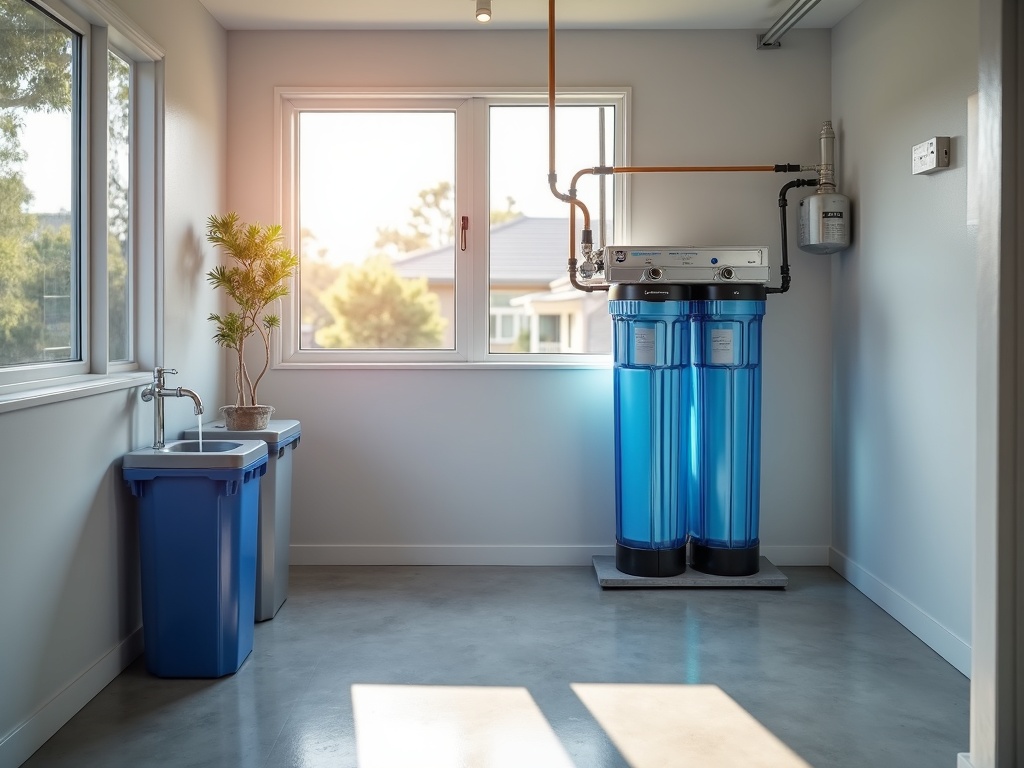
It’s easier than expected to understand; when water flows into the house from the main line it immediately goes through a filtration system. Everything subsequently downstream, every pipe, every appliance, every fixture, receives filtered water. One unit, one installation service, one maintenance issue down the road.
The benefits are physical, appliances last longer with sediment buildup. Washing machines and dishwashers run more efficiently without minerals clogging their parts. Showerheads and faucets remain clear instead of crusted over. Clothes remain softer and brighter exiting the wash. Hair and skin no longer need daily applications of chlorine exposure.
And then there’s the forgotten benefits over time; cleaner water means cleaner pipes free from wear unless induced by mineral and sediment from older piping systems developing corrosion over time.
What Gets Removed (And What Doesn’t)
Different filtration systems remove different contaminants; basic sediment filtration removes sand, rust, silt, obvious particles that sink to the bottoms of cups as visible particles cloud them. These protect appliances and fixtures but do nothing for chemical contaminants.
Carbon filtration removes chlorine, chloramines and organic compounds that impact smell and taste; this is what helps make treated water not smell gross or impact one’s skin/hair while simultaneously making better tasting filtered drinking options with fewer pesticides and industrial chemicals, if the appropriate filter is used.
More advanced systems combine them; a sediment pre-filter catches particles, carbon filtration does its job with chemicals, sometimes for specialized needs like heavy metals or bacteria. Some systems integrate softeners to handle hardwater conditions, but that’s technically not a part of filtration so much as conversion.
What whole house systems generally fail to remove are dissolved minerals which make water "hard"; ion exchange instead makes the unusable usable, which then softens it up, but that’s not actually filtration. Many homeowners employ both systems in series to make sure they’re taking care of everything.
The Maintenance Reality
Home systems are never maintenance-free; whole house systems are no exception to this rule. Generally speaking, filtration elements inside need to be exchanged every six months to a year based on water quality needs down the road; this includes changing sediment pre-filters more frequently if extraordinarily dirty areas are required; carbon filters tend to last longer before they become saturated.
Yet maintaining one system in one place is far easier than maintaining multiple outlets at multiple sinks at multiple times, and pitchers constantly needing refills, and fridges stocked with expensive units replacing those need forgotten about completely until flow restrictions become painfully obvious.
System sized matter as well; a family of two doesn’t need as large as a family of five with three pets—for how they’re going to approach their filtration systems differ in requirements measured by gallons per minute flow rate, they’re sized based on specific needs-for-specific-users, not smaller homes needing oversized ones wasting money for poor-sized installations, for they’re now under pressure problems for being undersized.
When It Makes Sense
Not every house would benefit from whole house filtration; if municipal quality is literally outstanding and there’s nothing wrong with taste/smell/sediment/accrual around appliances then it’s just not worth it for a simple pitcher filter for drinking water.
But if there’s evidence over multiple facets throughout any single room, hard water stains by appliances or light fixtures, chlorine smell infiltrating every shower or sediment caught at multiple taps, or worry of contaminants through a house, then this is an easier point-of-entry solution rather than piecemealing problems out at every appliance’s point-of-use.
Homes with well water often benefit more readily since wells generate more powerful contaminants than municipal systems can typically manage; anyone who lives near farms should consider exercising options with point-of-entry solutions, from iron staining to sulfur smells or agricultural runoff, all merit concern for lots of dismounting factors.
Cost-benefit analyses come into play regarding longevity; water heaters are expensive; if they last three more years because filtering helps, cheap replacement, and don’t forget that cleaning less soap/detergent needed also adds up but only pennies at best.
The Bottom Line on Water Quality
Water quality impacts every operation within a home and it’s not just about drinking there, is there there-scented solution justified, it’s about protecting all those expensive components that succumb to wear, it’s about ensuring plumbing remains intact with less wear-and-tear accumulation, and finally making showers less angry and laundry objectives seemingly better goals.
Treating upon entry relieves stress at symptom point-of-use; treating where it enters prevents problems simultaneously upstream before they happen. For households plagued by consistent problems across kitchens/laundry rooms/bathrooms all too often that exists one valve control that changes everything downstream thereafter worth treating to avoid future costs and inconveniences across time without ever needing to make another point-of-use compromise again.
Leave a Reply